

IBM has developed the world’s first 2nm processor
IBM is the benchmark of technology. The company is known for the birth of the 5nm and 7nm manufacturing process of processors, and now they will start a new chapter in the technological epic by making the first 2nm chip.
It is the size of a nail and hides a total of 50 billion transistors, which offers a 45% improvement in performance over 7nm processors, using 75% less power.
IBM mentions that the new processors will be very helpful in various areas, as follows:
- The autonomy of the phones will be four times better, so that the device can be charged only once every four days;
- The carbon footprint of data centers will be greatly reduced once the servers run on 2nm processors. Currently, their activity means 1% of total energy consumption globally;
- Laptops will be faster, providing stable Internet connections and increased processing power;
- Autonomous vehicles such as self-driving cars will be able to incorporate sensors that more efficiently detect surrounding objects, with short reaction times.
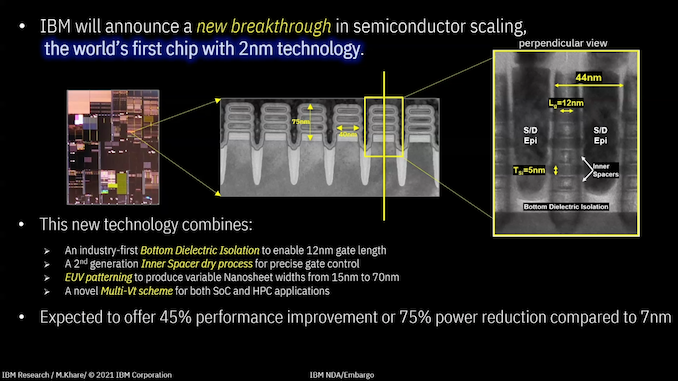
IBM managed this performance ahead of rivals M1 and A14 (Apple), along with Kirin 9000 (Huawei) were the first to manage to reach only the 5nm chips manufactured by TSMC.
On the other hand, other manufacturers such as AMD and Qualcomm choose the 7nm manufacturing process from TSMC (although Snapdragon 888 borrows 5nm technology from Samsung), and Intel does not even raise the issue, because there is little chance for it to give up 12nm antiquity by 2023.
Meanwhile, TSMC is working to expand 2nm technology in parallel with 3nm and 4nm, and IBM does not plan a global distribution, a sign that it will take some time until 2nm processors will be made available to the general public, for laptops, phones and other.


